
For centuries, a single scent has defined the identity of a teardrop-shaped island in the Indian Ocean. It is the warm, woody aroma of Ceylon Cinnamon, the sharp bite of Black Pepper, and the earthy fragrance of Curry Leaves wafting from clay pots. Historically known as the “Spice Island,” Sri Lanka remains the heart of the global spice trade, offering flavors that are as much about healing as they are about taste.

In this guide, we take a deep dive into the world of Sri Lankan spices, exploring the history that brought empires to these shores and the Ayurvedic wisdom that makes these plants a staple of modern wellness.

The Historical Importance of Spices in Sri Lanka

Long before modern maps were drawn, Sri Lanka was a vital node on the ancient Silk Road. As early as the 6th century BC, merchants from Greece, Rome, and Egypt braved the monsoons to reach the island’s ports. Why? Because the “True Cinnamon” (Cinnamomum zeylanicum) grew naturally only in the wet zones of Sri Lanka.
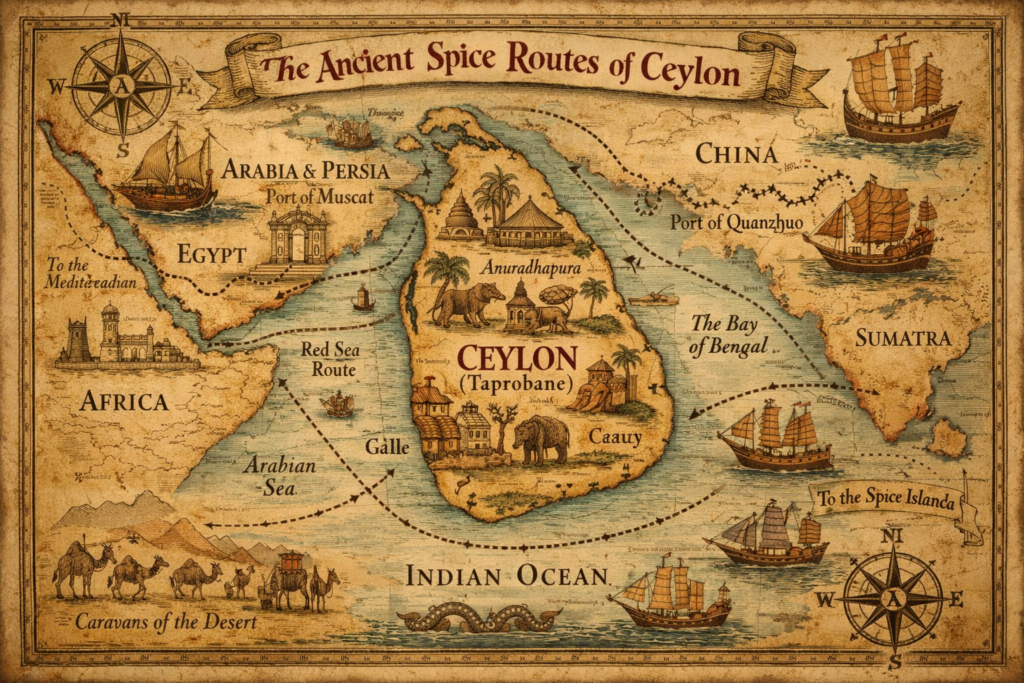
Vintage map showing Sri Lanka as a central hub for the ancient spice trade.
The Ancient Spice Routes of Ceylon

The quest for a monopoly on these “brown gold” treasures led to centuries of colonial struggle. The Portuguese, Dutch, and British each vied for control, leaving behind a rich cultural tapestry that still flavors Sri Lankan cuisine today.

Major Sri Lankan Spices: The Kings of the Kitchen

  1. Ceylon Cinnamon (The Real Deal)
  2. Unlike the common ‘Cassia’ cinnamon found in most supermarkets, Ceylon Cinnamon is delicate, sweet, and possesses a complex citrus undertone. It is prized for its paper-thin layers and ultra-low levels of coumarin, making it the healthiest choice for daily use.
    • Origin: Predominantly grown in the coastal belt from Negombo to Matara.
    • Benefits: Regulates blood sugar, boosts metabolism, and acts as a powerful antioxidant.
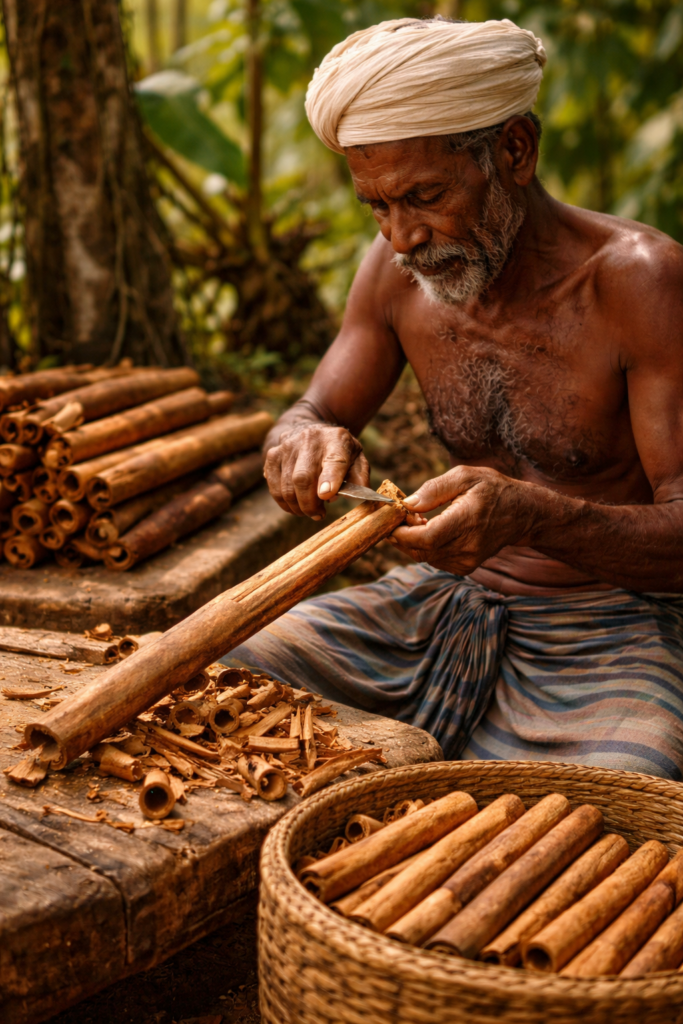
    Close-up of a Sri Lankan farmer traditionally peeling Ceylon cinnamon bark.
    Traditional Cinnamon Peeling


  3. Black Pepper (The King of Spices)
  4. Before the arrival of chilies via the Portuguese, Sri Lankan Black Pepper was the primary source of heat in the local diet. Sri Lankan pepper is unique because it contains a higher concentration of piperine, giving it a more pungent and robust flavor compared to other origins.

    • Use: The base of “Black Pork Curry” (Kalu Pol).
    • Benefits: Enhances nutrient absorption (especially curcumin from turmeric) and aids digestion.


  5. Cardamom (The Queen of Spices)
  6. Grown in the misty central highlands, Sri Lankan Cardamom is famous for its intense aroma. Both green and white varieties are produced, though the green pods are most sought after for their floral, eucalyptus-like notes.

    • Use: Added to tea, sweets like Watalappam, and savory rice dishes.
    • Benefits: Freshens breath and treats digestive discomfort.


  7. Cloves, Nutmeg, & Mace
  8. These spices are the “warmers” of Sri Lankan cuisine. Cloves from the Matale region are exceptionally oily and potent. Nutmeg and its lacy outer covering, Mace, provide a nutty, sweet heat that defines the flavor profile of Sri Lankan meat and vegetable stews.


  9. Turmeric and Curry Leaves
  10. No Sri Lankan kitchen is complete without the “Golden Healer,” Turmeric, and the fragrant Curry Leaf (Karapincha).

    • Turmeric: Used for its vibrant color and anti-inflammatory properties.
    • Curry Leaves: Sautéed in coconut oil at the start of every dish, these leaves release an earthy aroma that is the “soul” of the island’s food.

Traditional Sri Lankan Herbs & Ayurvedic Plants

Sri Lanka’s biodiversity extends into a vast pharmacopeia of Ayurvedic herbs. For thousands of years, these plants have been used to balance the three doshas (Vata, Pitta, and Kapha).

  • Gotukola (Centella asiatica): Known as the “herb of longevity,” it is used in salads (Sambol) to boost brain function and memory.
  • Kothala Himbutu: An indigenous vine used in Ayurvedic tea to manage diabetes and regulate blood sugar.
  • Neem (Kohomba): A powerhouse for skin health and natural detoxification.
  • Lemongrass & Ginger: Essential for refreshing infusions that combat respiratory issues and nausea.


Culinary Uses: The Art of the Sri Lankan Curry

In Sri Lanka, spices are rarely used in isolation. They are roasted, ground, and blended into Roasted Curry Powder—the secret weapon of the local chef. The roasting process darkens the spices and deepens the flavor, resulting in a complex, smoky profile that differs from the milder powders of neighboring India.

Key Culinary Techniques:

  • Tempering (Baduma): Frying spices in hot oil to release their essential oils.
  • Clay Pot Cooking: The porous nature of the clay allows the spices to permeate the food slowly, enhancing the medicinal value.

Export, Sustainability, and the Global Future

Today, Ceylon Spices are a major export for Sri Lanka, with a growing global demand for organic and ethically sourced products. By 2026, the industry is increasingly leaning into Sustainable Farming. Smallholder farmers are shifting toward regenerative agriculture and organic certification to preserve the island’s fertile soil.


Why Sri Lankan Spices Are World-Famous

The secret lies in the Terroir. The combination of tropical humidity, varied altitudes (from sea level to 2,000 meters), and volcanic soil creates a unique chemical composition in the plants. This results in higher essential oil content, making Sri Lankan spices more potent and flavorful than those grown elsewhere.